Sail to the edge of the Arctic sea ice in summer, watch for bears from deck and Zodiac with an expert team, and let an organised voyage handle everything from your UK airport.
Bears in the region
Around 3,000 in the Barents Sea population; about 300 stay on Svalbard year round (Visit Svalbard)
Legal distance
At least 300 m; 500 m from 1 March to 30 June (Governor of Svalbard, from 2025)
Protected since
1973, when hunting was banned
Bear season by ship
June to September
Midnight sun
About 19 April to 23 August in Longyearbyen
Churchill season
Mid October to late November
A Svalbard polar bear tour means sailing to the edge of the sea ice, where the bears hunt seals under the midnight sun. Nobody can promise you a bear, but a small expedition ship gives you the best chance anywhere in Europe. Travelsphere's Arctic Explorer leads the voyages below, with flights from your UK airport, hotels in Oslo and Longyearbyen, a week of Zodiac landings and a Holiday Director the whole way. Compare it with the other expedition voyages in the table, browse every Svalbard cruise we track, then read on for how the bear watching really works.
Svalbard voyages to compare
Organised holidays from UK operators. Facts from each operator's own site.
Prices are per person sharing, from the operators' own sites when we checked in October 2026. They change with dates and offers, so check the live price before you book.
What does a Svalbard polar bear tour actually involve?
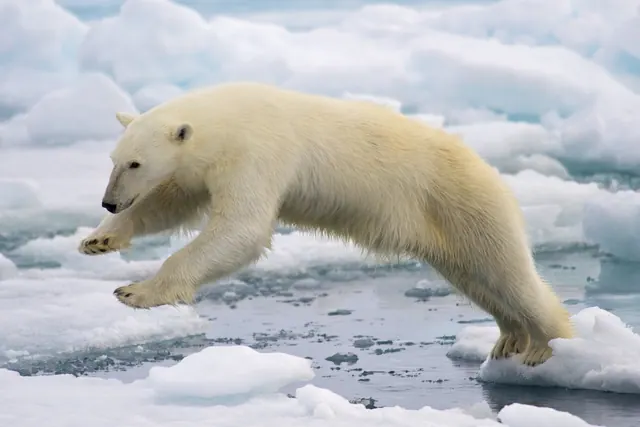
Picture yourself on deck at midnight, the sun still up, binoculars resting on the rail as the ship nudges along a field of broken ice. Someone on the bridge spots a cream-coloured dot that moves. Within minutes the rail is lined with people, all silent, and a polar bear is walking the floes ahead, nose down, following the scent of a seal.
That's the heart of it.
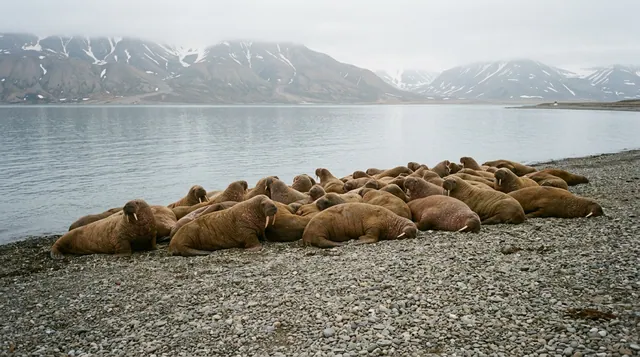
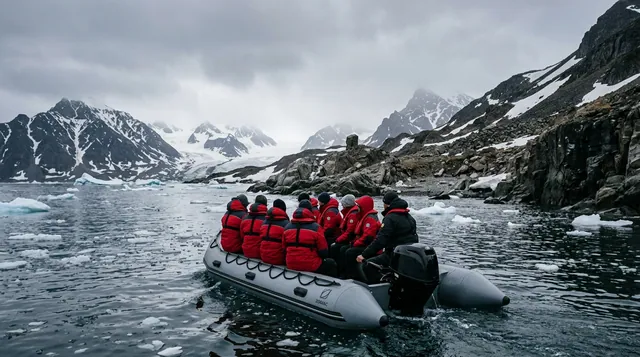
A trip like this isn't a safari with a fixed itinerary. It's an expedition cruise on a small ship, where the expedition leader reads the weather and the ice each morning, then heads for the fjords, glaciers and ice edges where bears are most likely to be. Polar bears live on the sea ice and hunt from it, so you'll watch them mostly from the ship or from a Zodiac, at a safe distance the law sets. Trips ashore come too, for hiking on the tundra, the walrus beaches and the seabird colonies, with armed guides who check each landing site for bears first.
Our guide to Svalbard's polar bears covers the animals and the polar bear population in detail. This page is about the holidays that take you to them.
Where the bears are in a Svalbard summer
Following the ice edge north
Through the summer the ice pulls back north and east across the archipelago, and most of the polar bears go with it. That's why expedition voyages push up the west coast of Spitsbergen from Longyearbyen, past Ny-Ålesund and through Northwest Spitsbergen National Park, then on past the 80th parallel to the drifting pack ice that stretches away towards the North Pole. Ships that get round into the Hinlopen Strait and along Nordaustlandet usually spend longest in good bear country.
Bears that stay on land
Not every bear follows the ice. A few spend the summer ashore, and you might find one picking over a whale carcass, raiding eggs below a bird cliff or sleeping on a slope above a fjord. When that happens near a planned landing, the guides simply call it off and the ship goes elsewhere.
What affects your chances of a sighting
Visit Svalbard is blunt about it: nobody can guarantee a polar bear sighting, and it can't be predicted. These things shift the odds, though:
Ice: a year with ice lying close to the coast keeps more bears within reach
Route: voyages heading north and east, or attempting a full circuit, spend more time near the ice
Time on board: every extra day sailing is another day of scanning
Weather: fog can hide a bear a few hundred metres away
Eyes on board: a ship with plenty of outside space and an expedition team on watch sees more
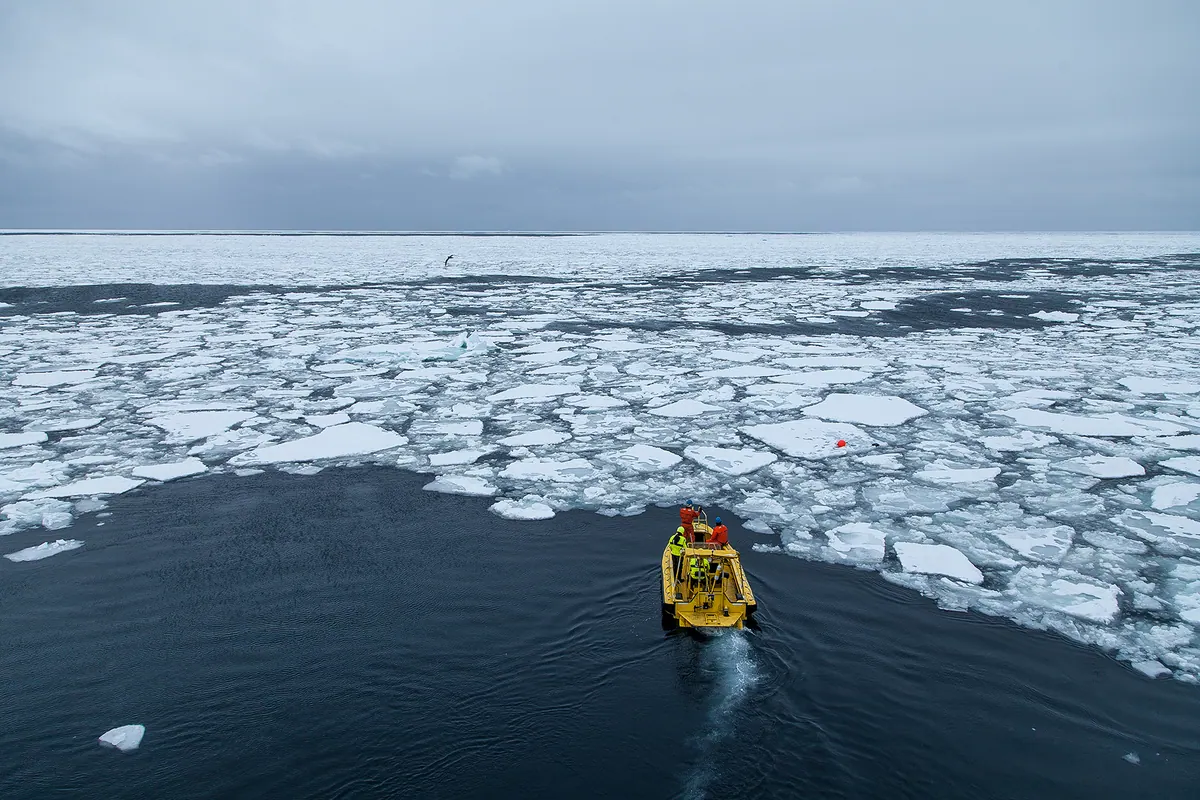
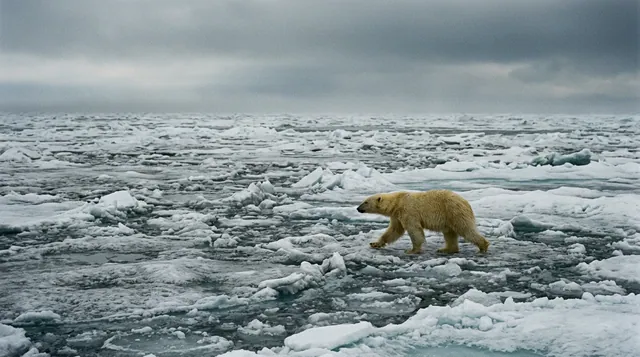
Drift ice at the edge of the pack in the Barents Sea. Photo: Evgenii Salganik, CC BY-SA 4.0.
A day of polar bear watching on an expedition ship
The watch from the bridge
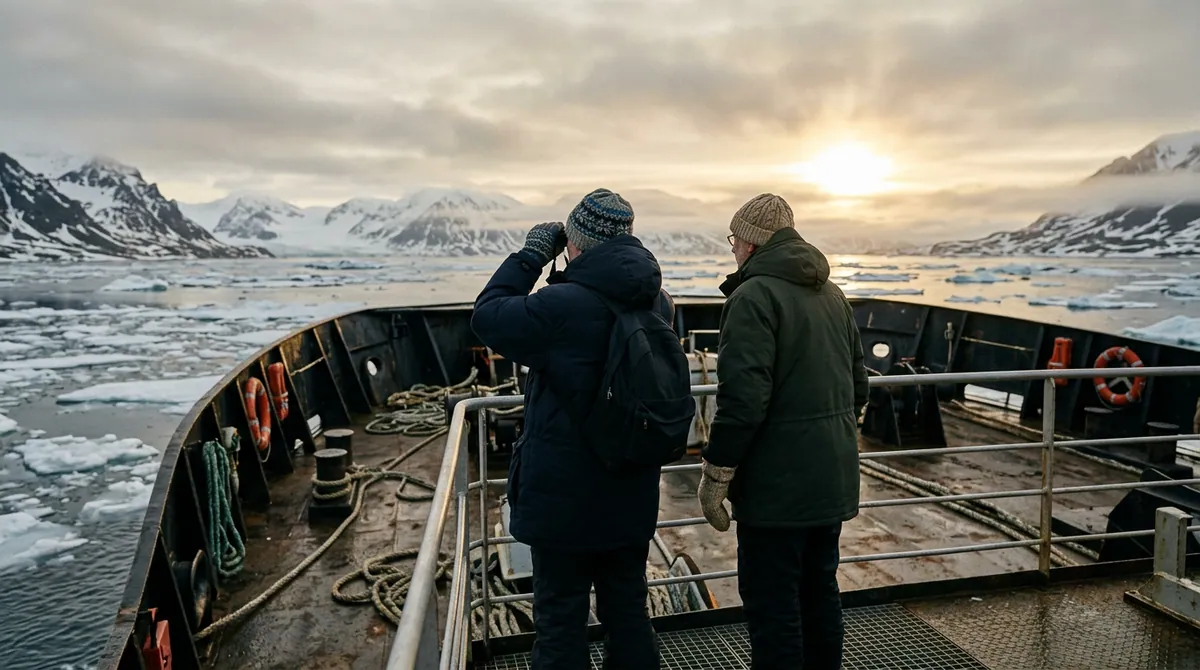
Officers and guides take turns scanning with big binoculars whenever the ship's moving, and if they spot a bear, an announcement usually goes out across the ship, whatever the hour. The ship then slows, turns and holds back at the legal distance, so the bear carries on as if you weren't there.
Zodiac cruising along the ice
On calm days the crew lowers the Zodiacs and you'll cruise slowly along the ice edge or under a glacier front. It's the closest you'll come to a hunting bear, and often your best wildlife moment of the day, as a bearded seal hauls out on a floe beside you or a walrus surfaces with a snort.
Landings with armed guides
Before you go ashore, guides with rifles and flares land first and scan the area. They then stand watch around the group while you walk the tundra among Svalbard reindeer, look for Arctic fox below the cliffs or wander old trapper huts. Lectures on board fill the gaps, covering the Arctic wildlife, the ice and polar history.
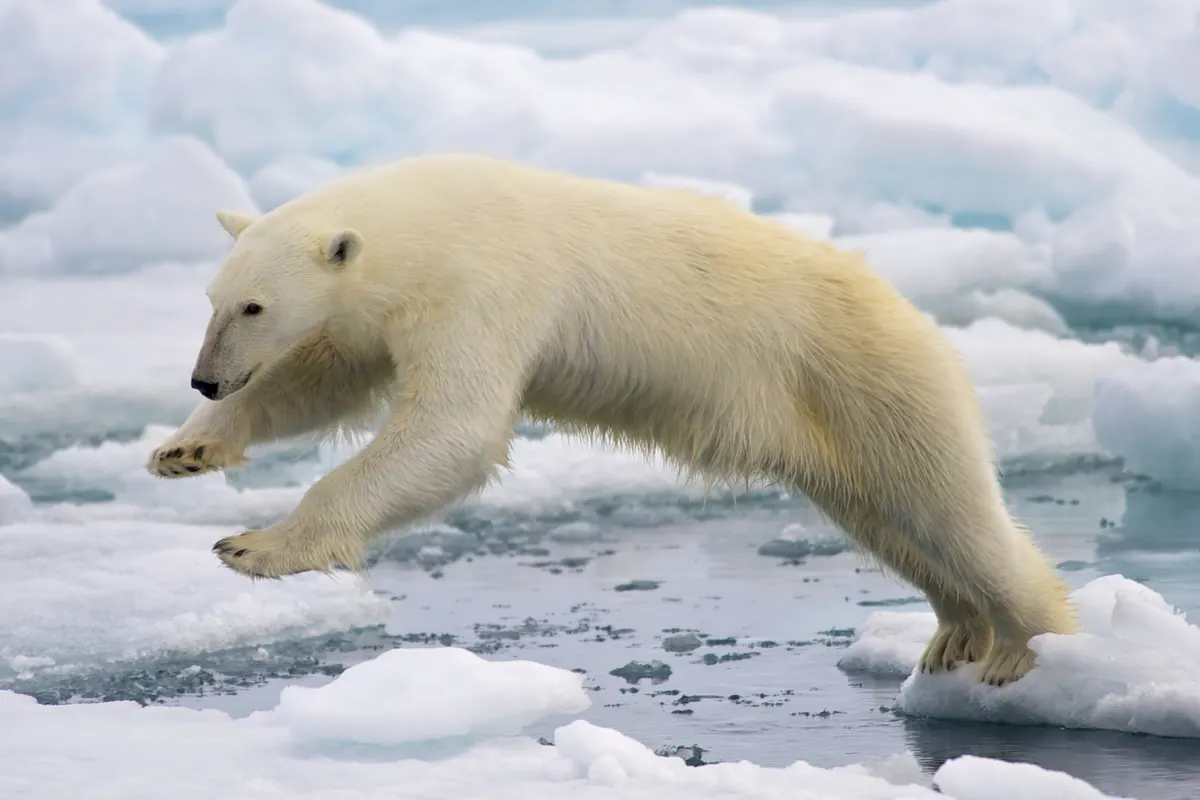
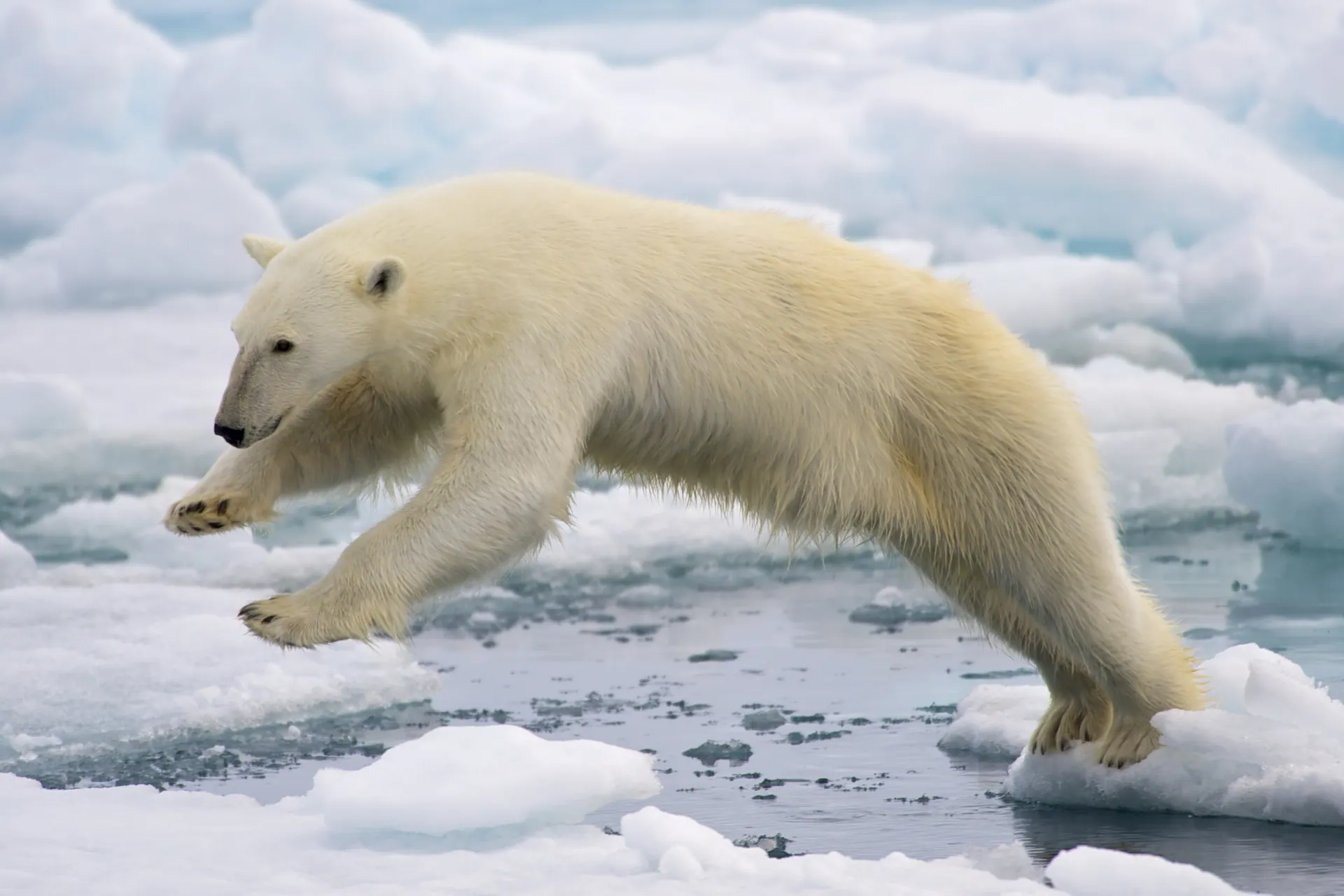
A polar bear on the ice. Photo: Arturo de Frias Marques, CC BY-SA 4.0.
Polar bear holidays compared: Svalbard, Churchill or a winter trip
Search for polar bear holidays and you'll meet three quite different trips. Greenland and Canada's Northwest Passage have bears too, but those voyages are longer and further from home. Here's how the main three line up for a UK planner:
Svalbard by ship
Churchill, Canada
Winter in Longyearbyen
When
June to September
Mid October to late November
Winter and early spring
How you watch
From the ship and Zodiac along the ice
From tundra vehicles on the shore of Hudson Bay
No tours set out to find bears
Getting there from the UK
Fly via Oslo to Longyearbyen
Fly to Canada, then Winnipeg, then a flight or train north
Fly via Oslo to Longyearbyen
Chance of a bear
Good, never guaranteed
High in the freeze-up weeks
A rare bonus
What else you'll see
Glaciers, walrus, whales, reindeer, midnight sun
Tundra, Arctic fox, northern lights
Northern lights, snowmobiles, dog sledding
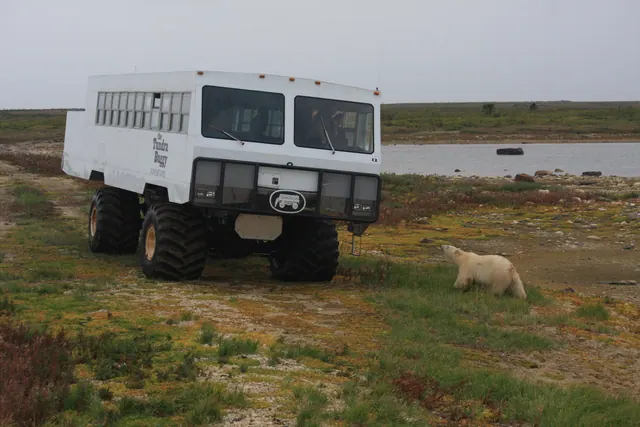
Churchill works because the bears gather on the coast each autumn, waiting for the bay to freeze so they can get back to hunting seals, though climate change is shifting when that happens. The trips are land-based, in high, specially built tundra vehicles. From Britain it's a long haul, though you can add the northern lights. Svalbard is closer to home, wilder and far more varied, with the bears in a landscape of ice and glaciers rather than on the shore. Our Svalbard or Churchill guide goes deeper.
Winter packages sold as polar bear trips are a different matter. Visit Svalbard says no tours are organised to seek out bears around Longyearbyen and the other settlements, so treat any bear on a winter break as luck.
The polar bear tours that go there
Facts below come from each operator's own page, and prices and dates are in the table above.
Travelsphere Arctic Explorer: Land of the Polar Bear
The Arctic Explorer starts at your chosen UK airport. You'll get a stay in Oslo with a city tour, Holmenkollen and the Fram Museum, an overnight hotel stay in Longyearbyen with the Svalbard Museum, then a week on the G Adventures Expedition Ship in a main deck window cabin, with Zodiac excursions led by expedition guides. A Travelsphere Holiday Director hosts it from start to finish. Departures are in July.
HX Circumnavigating Spitsbergen
HX's expedition cruise In the Realm of the Polar Bear tries to sail right round Spitsbergen, ice permitting, crossing the 80th parallel and calling in Northwest Spitsbergen National Park. It runs on MS Spitsbergen or MS Fram on an all-inclusive basis, with an overnight in Longyearbyen and flights from Oslo, so getting to Oslo is up to you.
Titan Arctic Wonders
Titan's full circumnavigation of Svalbard is the longest voyage here, on MS Fram. Landings include Ny-Ålesund, Hornsund and Bellsund. Flights go from London Gatwick, a shared chauffeur collects you from home, and a tour manager travels with you.
Exodus Svalbard in Summer
The Exodus voyage flies in by charter from Helsinki after a hotel stay there, then spends a week in the archipelago's wilderness by ship and Zodiac with an expert tour leader. Its departure is in June, early in the season, when there's usually more sea ice about.
What an organised voyage takes off your hands
Svalbard is remote, and it asks a lot of anyone travelling on their own. Leave the settlements and you need polar bear know-how, a deterrent and a firearm. That's exactly why Visit Svalbard nudges visitors towards organised trips.
Handled for you on the Arctic Explorer
Return flights from your UK airport, including the connection to Longyearbyen
Four-star hotels in Oslo and Longyearbyen before you sail
Every transfer between airport, hotel and ship
A main deck window cabin on the expedition ship
An expedition team choosing each day's fjords, ice and landings
Armed guides who check every landing site for bears
A watch from the bridge for bears while you sail
Zodiac excursions and lectures on the wildlife and the ice
A Holiday Director to sort problems from home to the ship and back
Thinking of doing the journey in stages yourself? Our guide to a cruise to Svalbard from the UK walks through the flights, passports and connections.
The rules that protect the bears
Under newer rules, the Svalbard Environmental Protection Act has set a minimum distance from polar bears, wider in spring when mothers and cubs are out on the ice. Anyone who finds themselves closer has to back away. It's also an offence to disturb, attract or chase a bear, and the Governor has fined a visitor for sounding a boat's horn to wake a sleeping bear.
For you, that means watching through good binoculars or a long lens rather than getting close.
Expedition ships work Svalbard from late spring to early autumn. June voyages meet the most ice and snow, so ships often find bears further south, with the cliffs loud with nesting seabirds. July brings green tundra, reindeer calves and the full midnight sun. By August the ice has usually retreated far north, so voyages that reach it can find bears gathered on what's left, and the light turns golden late in the evening.
Hoping for the northern lights as well? Summer skies never get dark enough, and only the last sailings, as September nights draw in, stand much chance.
The organised side makes life easier at any age, but the physical bits matter. Travelsphere rates the Arctic Explorer as active and says it isn't suitable for anyone with limited mobility. Getting into a Zodiac means stepping down from the ship's platform, and landings are often wet, onto shingle or rock in waterproof boots. The ship has steep stairs and no lift.
Much of the bear watching happens from deck, so a sighting doesn't depend on going ashore. Our guide to Arctic cruises for over 60s covers what each day asks of you.
Watching from the ship's rail. Illustrative image.
Choosing your polar bear holiday
If you'd like to leave from a UK airport with flights, hotels, the expedition and a host all arranged, the Arctic Explorer is the most complete package here, and July brings the tundra at its greenest. Want the longest time near the ice and happy to reach Oslo or Helsinki yourself? HX and Exodus are worth a look, and Titan adds a chauffeur from your door for its longer circuit. Whichever you pick, book it for the whole Arctic expedition: the glaciers, the wildlife and the remote wilderness, with the bear as the moment you'll never forget if it comes. Every voyage we follow is on our Svalbard cruise home page, and our guide to polar bears in Norway explains why Svalbard is the only part of Norway where they live.
Questions people ask
Are polar bear sightings guaranteed on a Svalbard cruise?
No. Visit Svalbard says a sighting can't be predicted, and no operator can promise one. Voyages that spend longer near the sea ice, especially in the north and east of the archipelago, give you the best chance, and the expedition team keeps watch from the bridge whenever the ship is moving.
What is the best month for a polar bear tour in Svalbard?
June to August is the main season. June brings more ice close to Spitsbergen, while by August the ice edge is usually far north, where bears gather on what's left. See our guide to the best time to see polar bears in Svalbard.
How close do you get to polar bears?
Svalbard law sets a minimum distance from bears, wider in spring, and ships and Zodiacs hold back at it. You'll want good binoculars and, for photos, a long zoom lens.
Is Svalbard or Churchill better for seeing polar bears?
Churchill in Canada gives a higher chance in the autumn freeze-up weeks, watched from tundra vehicles on the shore. Svalbard is closer to the UK and offers bears on the sea ice alongside glaciers, walrus and the midnight sun. Our Svalbard or Churchill guide compares them.
Can you see polar bears from Longyearbyen?
Rarely. Bears do sometimes come near the settlements, but Visit Svalbard says no tours are organised to seek them out, so day trips from town aren't a reliable way to see one. A ship that goes looking along the ice is.
Are landings safe with polar bears about?
Guides with rifles and flares go ashore first to check each landing site, then stand watch while you explore. If a bear is nearby, the landing is cancelled and the ship moves on.
Do you need to be fit for a polar bear cruise?
You need steady balance for Zodiac boarding and wet landings, and the ships have steep stairs. Travelsphere rates its Arctic Explorer as active and not suitable for limited mobility. Much of the bear watching happens from deck, though.

 Travelsphere